GOVERNANCE FRAMEWORK QUESTIONS
About the AGFLOW Institutional Governance Framework.
How is AGFLOW different from traditional market research?
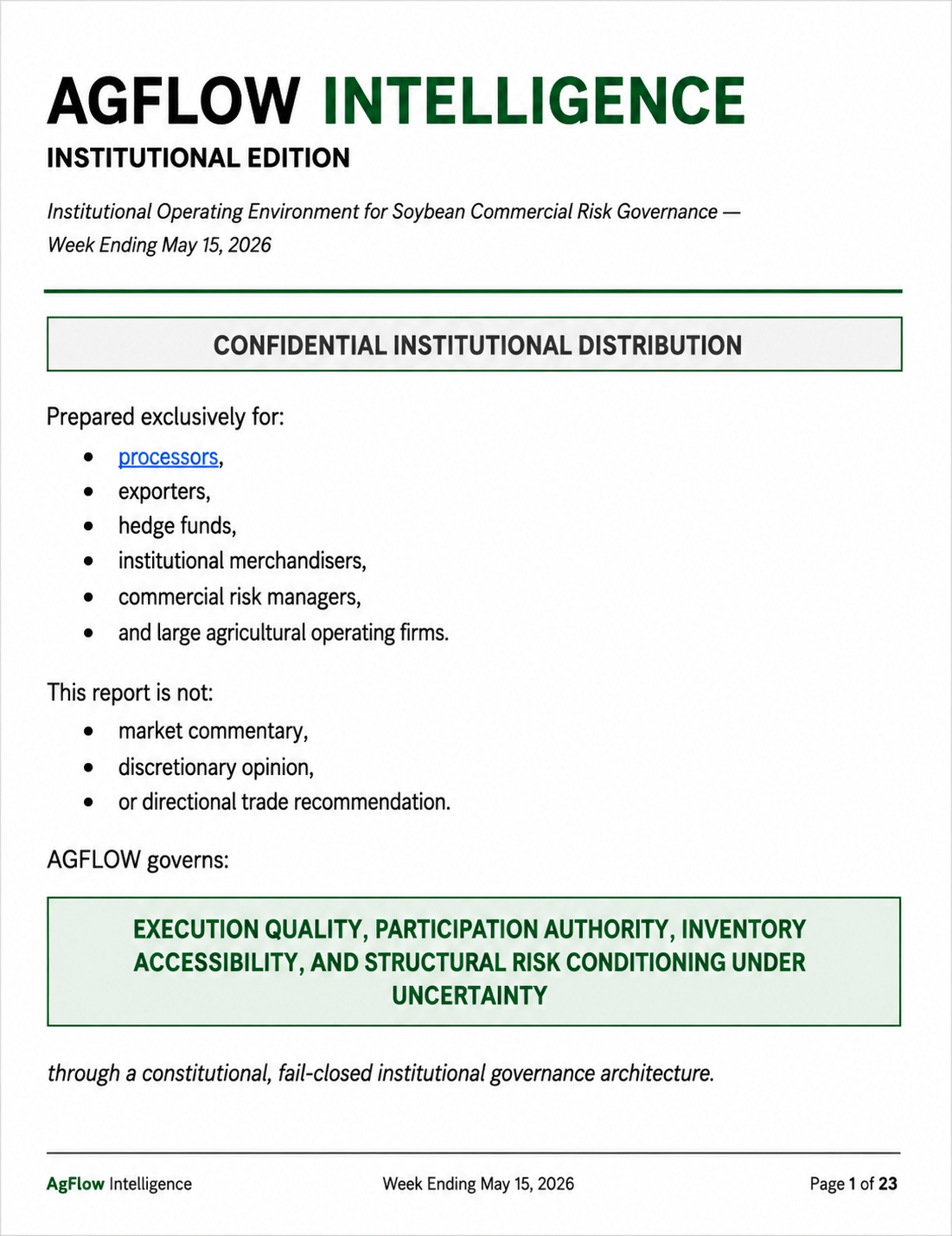
Most agricultural market research explains what happened. AGFLOW evaluates whether the soybean system constitutionally supports participation by reconciling structure, transmission, inventory accessibility, spreads and carry, positioning stability, and multi-engine coherence before execution authority expands. The objective is not directional prediction — it is governed commercial decision-making under uncertainty.
Why does the framework contain so many governance layers?
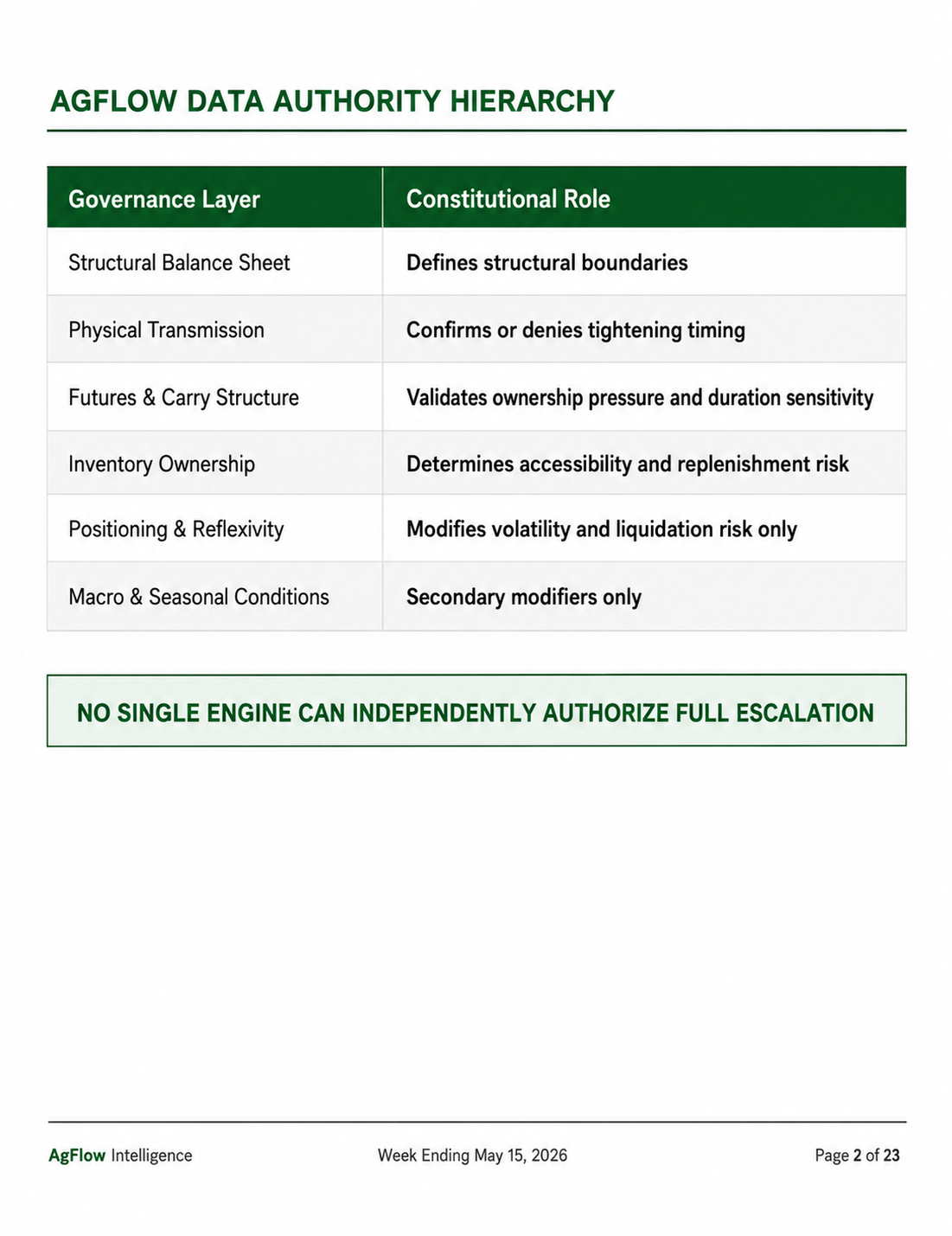
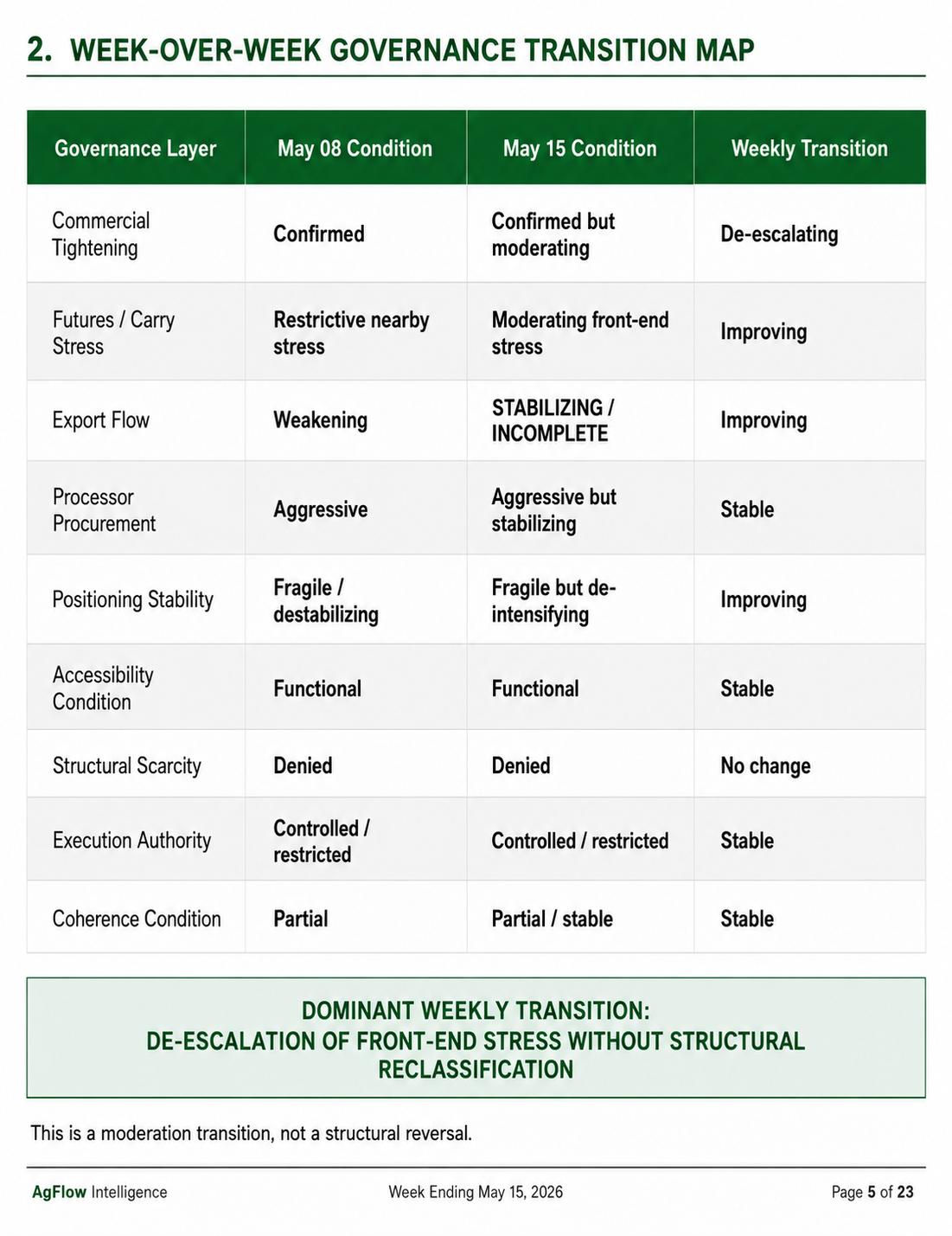
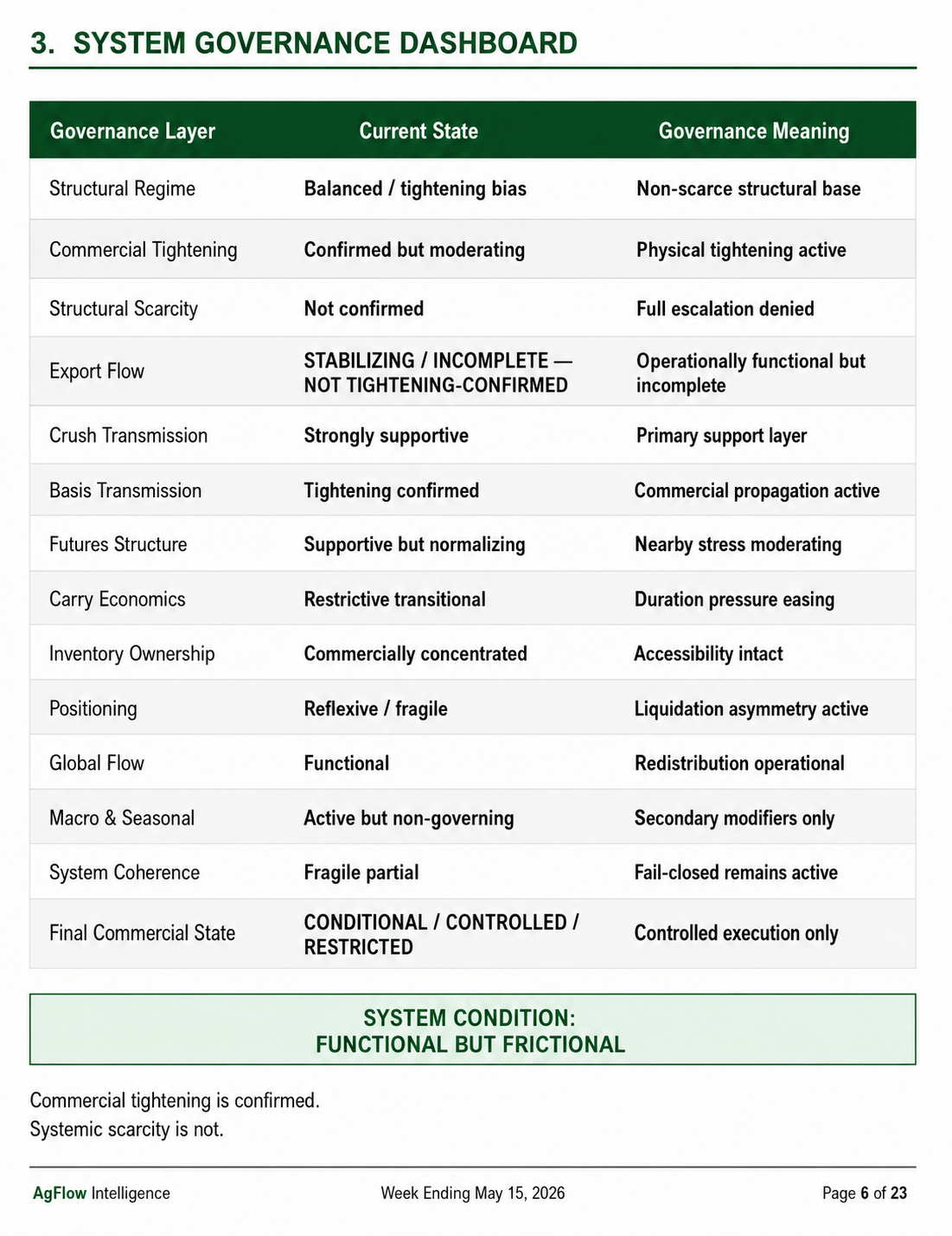
The soybean system cannot be governed through a single signal. AGFLOW integrates structural supply conditions, physical transmission, export synchronization, inventory ownership, spread structure, positioning reflexivity, contradiction density, and execution governance into a unified constitutional framework. Each engine exists to determine whether tightening is structurally confirmed, operationally incomplete, reflexively unstable, or constitutionally restricted. No single engine can independently authorize escalation.
What does “fail-closed governance” mean?
AGFLOW does not assume participation should occur. Execution authority remains restricted unless structure, transmission, positioning, accessibility, spreads, and overall system coherence confirm simultaneously across the soybean complex. When synchronization deteriorates, escalation authority contracts automatically.
Can the framework be shared across a commercial team?
Yes. Institutional subscriptions are designed for merchandising desks, procurement teams, risk managers, commercial operators, and execution teams operating within the same organization. Enterprise licensing structures are available for broader institutional distribution.
Does AGFLOW provide custom institutional engagements?
The current focus is maintaining constitutional consistency across the weekly governance framework. Future institutional deployments may include enterprise licensing, custom governance integration, internal decision infrastructure, and institutional advisory architecture.
Is the data proprietary or public?
Inputs are public — USDA WASDE, weekly export inspections, AMS, COT, regional basis quotes. The proprietary layer is the framework: how those inputs are weighted, sequenced, and converted into a single governance output each week.You could theoretically build it yourself. Or you could read it Sunday morning over coffee.